.webp?sw=50&sfrm=jpg&q=90)
Split ends on one hand, extra hair in the brush on the other. It’s natural to connect the two and make you wonder: are my split ends causing my hair to fall out?
It’s a reasonable worry, and one that comes up constantly in online search results and salon chairs alike. The short answer is reassuring, while the longer answer is more useful. Let’s get into both.
Split Ends Don't Cause Hair Loss
Split ends, technically called trichoptilosis, are a form of mechanical damage to the hair shaft. The protective cuticle frays at the tip of the strand, and the inner cortex is exposed. That’s damage, but it’s not hair loss.
Hair loss occurs when the follicle itself stops producing hair or when the strand detaches from the follicle prematurely. The causes are internal: genetics, hormones, stress, nutritional deficiencies, or medical conditions. Split ends can’t trigger any of those follicle-level events. They happen on the opposite end of the strand, far from the root.
So if split ends aren’t causing hair loss, why does your hair look thinner?
What Happens Inside a Hair Strand When It Splits
The damage starts at the very tip. Once the cuticle cracks open, the cortex (the structural core of the strand, made up of protein chains and disulfide bonds) is exposed to air, water, heat, and friction. Without that cuticle shield, the split travels upward.
A single split end can travel up the hair shaft if left unchecked. As the split widens, the strand weakens at the damage site. Eventually, it snaps.
That snap is breakage. And when enough strands break at various points along their length, the collective result is hair that looks thinner, shorter, and less dense, even though every follicle is still actively growing new hair.
The problem isn’t at the root. It’s at the ends and mid-lengths, where structural integrity has been compromised by unmanaged splits.
Breakage vs. Hair Loss: How to Tell Which One You're Seeing
Hair loss and breakage can look similar at first, but there’s a clear difference once you know what to look for.
- Hair Loss: Hair loss (shedding) looks like full-length strands with a small white or translucent bulb at the root end. These hairs completed the growth cycle and detached from the follicle naturally or prematurely. When you see a bulb, the issue is follicle-level.
- Hair Breakage: Hair breakage looks like shorter pieces of varying lengths with no bulb. There will be a blunt or frayed end where the strand snapped. These hairs were still attached at the root; they just broke along the shaft. When you see short, bulb-less pieces on your pillow, brush, or clothes, the issue is structural.
Hair loss requires addressing the underlying cause, such as stress, hormones, nutrition, or medical conditions, often with professional guidance. Breakage is different. It happens along the hair shaft, not at the root. That means strengthening the hair fiber and reducing damage helps prevent snapping. Fortunately, breakage is more manageable with the right products and habits.
How to Prevent Split Ends from Stealing Your Length
You can’t glue a split end back together. Once the cuticle has cracked, the only true fix is trimming it off. But there are two critical things you can do. Slow the rate at which new splits form, and prevent existing splits from traveling up the strand.
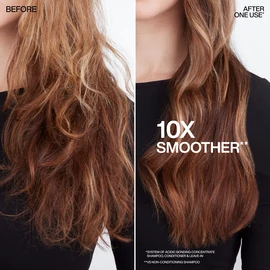
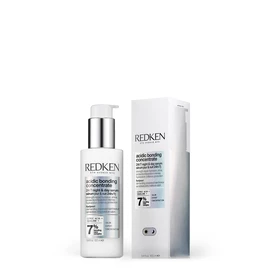
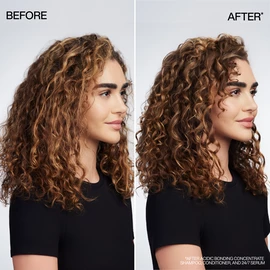
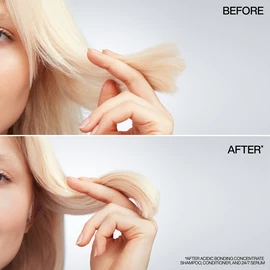
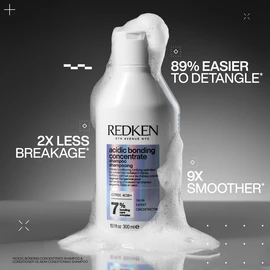
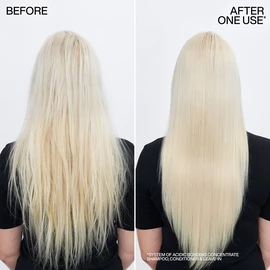
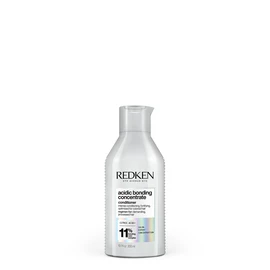
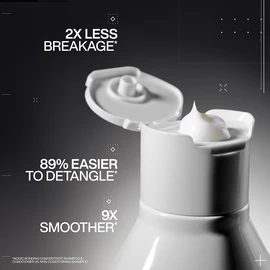
- Reinforce Bonds with Every Wash: The Acidic Bonding Concentrate Shampoo and Acidic Bonding Concentrate Conditioner deliver continuous bond reinforcement with their Bonding Care Complex and citric acid. Stronger internal bonds mean strands are more resistant to the mechanical stress that causes splits in the first place. When used together, this shampoo and conditioner system delivers up to 2x stronger and 56% reduction in breakage.
- Seal Damaged Ends with Targeted Protection: The Acidic Bonding Concentrate Hair Bandage Balm is designed specifically for this. With the highest Bonding Care Complex concentration in the ABC line (8%), it provides strength repair for damaged, dry split ends in 1 use plus protection against heat up to 450°F Its lightweight and fast-absorbing, non-greasy formula and finish reduces breakage for stronger, smoother, and instantly revived ends.
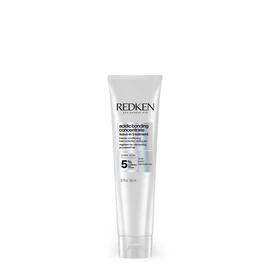
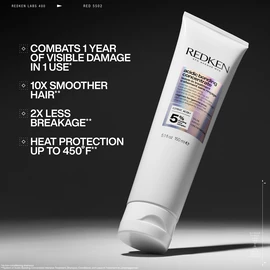
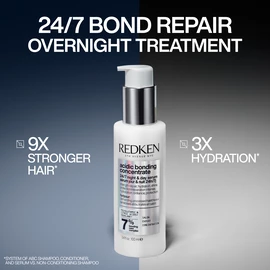
- Add Ongoing Leave-In Support: Between washes, the Acidic Bonding Concentrate Leave-In Treatment with 5% Bonding Care Complex keeps working on bond reinforcement, ultimate repair, intense conditioning, and color fade protection. Apply to damp hair after washing, focusing on mid-lengths to ends where splits accumulate.
- Trim Strategically: Ask your stylist for micro-dusting every 8 to 12 weeks (we’re talking getting millimeters trimmed off, not inches). This approach preserves your length while removing split ends before they travel up the shaft. Paired with a bonding routine, micro-dusting helps keep length intact.
Split ends aren’t a hair loss problem. They’re a hair retention problem, and that’s a much more solvable one. Protect what you’re growing, reinforce the bonds that hold each strand together, and those splits stop stealing your length.
FREQUENTLY ASKED QUESTIONS
Answers to Your Frequently Asked Questions



.webp?sw=270&sfrm=jpg&q=90)





.webp?sw=270&sfrm=jpg&q=90)