In this article:
- What Are the Signs of Damaged Hair?
- How Do You Tell How Damaged Hair Is?
- What Does Each Level of Hair Damage Look Like?
- Which Products Match Which Level of Damage?
- When Is Hair Damage Too Far Gone for Product to Help?
Key Takeaways:
- Hair damage is graded by depth: how far past the cuticle the wear has reached, and whether the inner structure that carries a strand’s strength is intact.
- The scale has four levels: surface roughness, visible split ends, elasticity loss, and structural failure of the fiber.
- Two at-home tests place your hair on the scale. The wet stretch test reads elasticity, and the slip test reads cuticle condition.
- Everyday mechanical wear sits at the mild end and is a fortification job, which is what Extreme Length is built for.
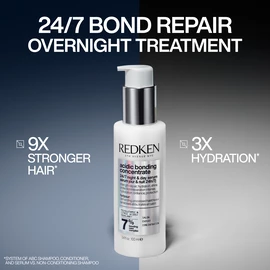
- Chemically processed hair with weakened internal bonds sits at the severe end and needs the bond-repair system in Acidic Bonding Concentrate.
QUICK ANSWER
Hair damage runs on a scale from surface roughness through visible split ends and elasticity loss to structural failure, and where hair sits decides whether product chemistry can help or cutting is the honest answer.
Hair can look and feel damaged long before it is too far gone to improve. Roughness, dryness, and tangling can often be managed with the right routine. Once the fiber is splitting, breaking, or missing material, though, products have limits. Knowing where your hair falls on that spectrum helps you choose the right approach for its condition.
What Are the Signs of Damaged Hair?
The signs of damaged hair are the visible and tactile changes that appear once the cuticle, the layer of overlapping scales wrapping the outside of every strand, has been lifted, chipped, or worn through: roughness, dullness, tangling, frayed ends, and strands that stretch or snap when handled.
Damage shows up on the outside first. A flat cuticle reflects light in one direction, slides against itself, and holds moisture inside the fiber. When those scales lift or wear away, all three behaviors change at once, so damage rarely arrives as a single symptom. Here’s what to look for:
- Rough texture: a finger run toward the ends meets resistance, and the ends feel coarser than the roots.
- Dullness: a lifted cuticle scatters light instead of reflecting it, so hair looks flat with no band of shine.
- Tangling: raised scales act like tiny hooks, so strands catch on each other and detangling drags.
- Uneven porosity: color grabs faster in some sections, and drying time varies across the head.
- Frayed ends: the tips look feathered and pale instead of blunt, and light passes through them.
- Snapping: short broken segments in your brush, distinct from full-length shed hairs with a small white bulb at one end, the normal 50–100 hairs a day everyone sheds and not a sign of damage.
Snapped segments and frayed ends often turn up together, but they sit in different places on the strand and answer to different things. See Breakage vs. Split Ends: How to Tell the Difference for how to tell one from the other.
How Do You Tell How Damaged Hair Is?
Grading your hair means running two physical tests, the wet stretch test and the slip test, which read elasticity and cuticle condition directly instead of relying on how your hair looks on a good day.
Both take under a minute, and both need a shed strand from your brush, not one pulled from your head.
The wet stretch test
Elasticity is the best indicator of how deep damage has gone, because it reports on the cortex, the inner protein bundle that carries a strand’s strength.
- Wet the shed strand thoroughly and hold it between the thumb and forefinger of both hands, about two inches apart.
- Pull slowly and steadily. Do not snap it.
- Watch how far it travels before it resists, and whether it returns to its original length when you release it.
- Healthy hair stretches a little and springs back. Mildly damaged hair stretches further and returns most of the way. Hair that has lost elasticity travels a long way, feels slack, and stays stretched. Hair that snaps with minimal stretch indicates the highest level of damage on the test.
The slip test
Slip describes how smoothly the strand’s surface moves against your fingers. Pinch a dry strand at the mid-length, slide your fingers toward the end, then back up. Healthy hair runs smooth both ways, while a roughened cuticle drags on the way up. The further up the strand that roughness starts, the more of the length is involved.
Test the same section each time. Ends are always more worn than roots because they are years older.
What Does Each Level of Hair Damage Look Like?
The severity scale has four levels, each defined by how deep into the strand the wear has reached: surface roughness, visible split ends, elasticity loss, and structural failure.
Level one: surface roughness
The cuticle is lifted or slightly worn but still continuous, and the cortex underneath is untouched. Hair looks dull, tangles, and feels dry, but the wet stretch test comes back normal and the ends are still blunt..
Level two: visible split ends
The cuticle has worn away at the ends and the cortex is exposed, so the fiber separates along its length. The tips look pale and feathered, and a hand run down the length catches. Elasticity in the mid-lengths is usually still fine. The split is permanent, but everything above it is protectable.
Level three: elasticity loss
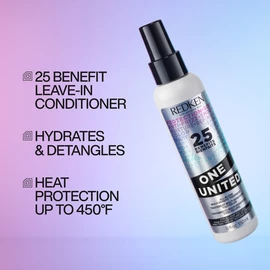
Damage has reached the cortex along the length, not only at the tips. Wet hair stretches well past normal and stays stretched, dry hair feels brittle, and styles drop out early because the fiber cannot hold a shape. This level is usually chemical in origin, though sustained high-heat styling produces the same picture. If you use hot tools, add a dedicated heat protectant before the tool goes near your hair.
Level four: structural failure
The internal bond network has degraded far enough that the fiber no longer behaves like hair. Wet strands feel gummy, mush between the fingers, and can come apart under gentle tension. Dry, the same hair snaps with no stretch at all. The honest advice here is to stabilize what you can, check in with your stylist before any further processing, and plan on removing the worst of the length.
Which Products Match Which Level of Damage?
This helps you choose the right product for the type of damage you are seeing. Levels one and two call for Extreme Length, which fortifies hair worn down by everyday handling; levels three and four call for Acidic Bonding Concentrate, which helps reinforce bonds weakened by chemical processing. The type of damage determines which formula is appropriate.
Levels one and two: everyday wear
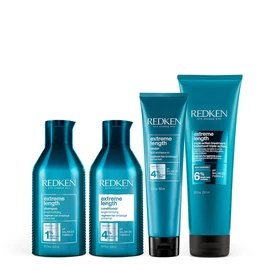
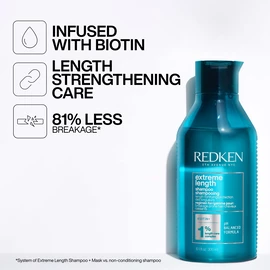
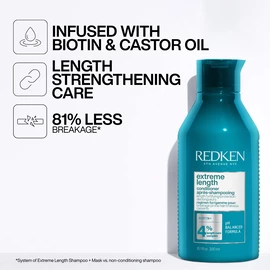
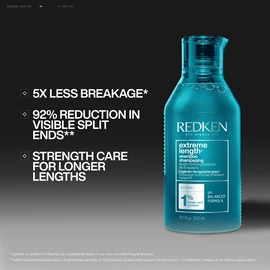
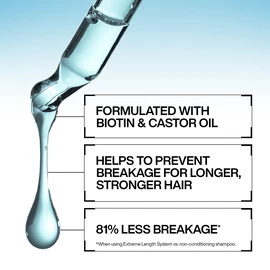
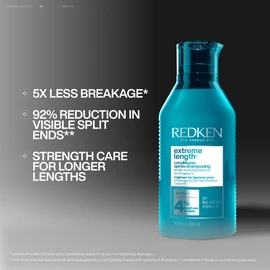
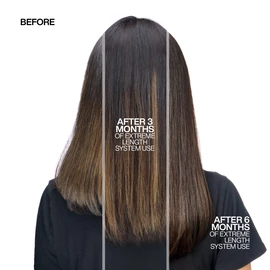
Hair that is rough, tangly, or splitting from brushing, heat, friction, and the plain accumulation of time is a fortification job. Extreme Length is formulated with Biotin, Castor Oil & Redken’s Length Care Complex to strengthen damaged and weak hair, and helps fortify lengths to reduce breakage when used as a system. Start with Extreme Length Biotin Shampoo, follow with Extreme Length Conditioner, and keep the ends protected between washes with the Extreme Length Leave-In Treatment.
Used as the full system of shampoo, conditioner and leave-in treatment, Extreme Length helps reduce breakage by 81%.*
* Reduce breakage by 81% when using the full system of Extreme Length Shampoo, Extreme Length Conditioner, and Extreme Length Leave-In Treatment.
Level three: chemical damage
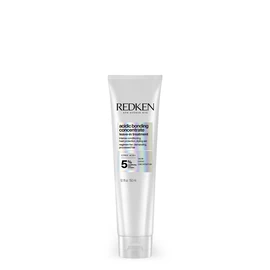
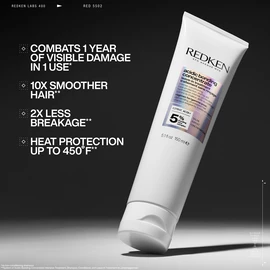
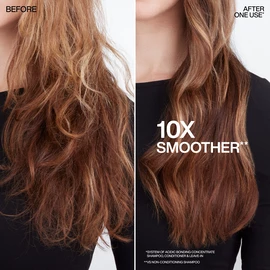
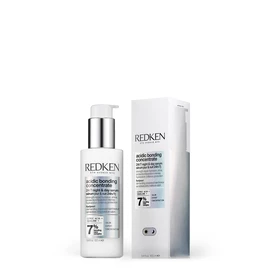
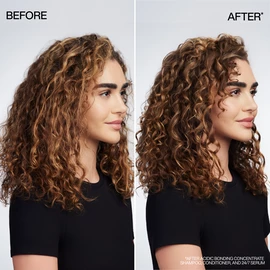
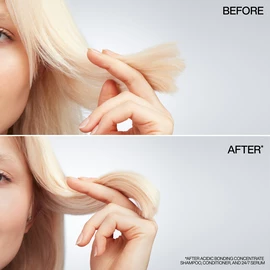
Color, lightener, relaxers, and repeated processing leave damage inside the fiber that surface care cannot reach. Redken’s Bonding Care Complex + Citric Acid works at a molecular level and penetrates the cuticle capturing metal ions, reinforcing weakened bonds and improving hair strength. Build the wash step around Acidic Bonding Concentrate Shampoo. Once a week, apply the Acidic Bonding Concentrate Intensive Treatment, leave on for 5–10 minutes, rinse, then follow with the shampoo and conditioner — one treatment per wash, not a between-washes product.
Level four: stabilize, then cut
Product care will not restore elasticity a compromised cortex has lost, so at level four the priority is stabilizing the hair you keep and removing the failed length. Hold the same Acidic Bonding Concentrate routine for what remains, check in with your stylist before booking any optional service, and book the cut.
If your hair is both processed and worn, treat the chemically processed hair first, because smoothing layered onto a weakened fiber will not hold.
On either route, slip and softness change from the first wash; strength takes several weeks of consistent use.
When Is Hair Damage Too Far Gone for Product to Help?
That point arrives when the fiber has lost the internal structure that lets it hold tension and shape, the point past which product chemistry can still improve how hair looks and behaves but cannot restore what is no longer there.
Hair cannot biologically heal itself, so these three signs describe how the hair fiber can be improved or conditioned:
- Wet hair that mushes: a wet strand that comes apart under light pressure, or mushes between the fingers instead of springing back at all, has failed in the cortex. This is a step past the slack, stays-stretched reading at level three: there is no longer enough intact structure to reinforce.
- Splits that keep climbing: when new splits appear well above a fresh cut line within weeks, the fraying is running further up the strand than the scissors went.
- No stretch at all: dry hair that snaps instantly with no travel has no flexibility left to work with.
On any of them, the productive move is a cut, not another product. Removing compromised length resets the baseline and stops the fraying from traveling upward into hair that is still sound.
When to Book a Professional Consultation
If your two tests disagree, or your hair is both chemically processed and mechanically worn, book a consultation with a Redken-certified stylist. Someone with your hair in their hands can see how far up the strand the damage runs, watch how it behaves wet under tension, and draw the line between what a routine will hold and what the scissors should take.
Find a Redken salon near you.
NEXT: Breakage vs. Split Ends: How to Tell the Difference. Grading your hair tells you how far the damage has gone. The next step is naming exactly what kind of damage you’re looking at, and why only one of the two responds to a trim.