In this article:
- How Often Should You Wash Damaged Hair?
- How Often Should You Trim Damaged Hair?
- How Often Should You Deep Condition Damaged Hair?
- When Should You Change the Schedule?
Key Takeaways:
- Wash frequency for damaged hair is the number of cleansing cycles the fiber can take per week without losing more lipids and moisture than it can replace, which for most damaged hair is two to three.
- Trims work preventively rather than cosmetically: a split end travels upward along the strand once it forms, so a six to eight week interval removes the damage before it costs you length further up.
- Masking and conditioning run on different intervals, because conditioner belongs in every wash while a mask is a concentrated treatment that replaces conditioner once or twice a week rather than stacking on top of it.
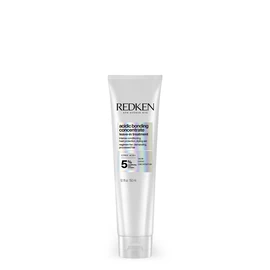
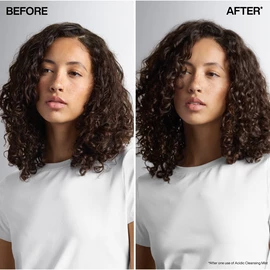
- Cleansing with the sulfate-free Acidic Bonding Concentrate Shampoo at pH 4.5–5.5 means fewer washes are needed, because each one reinforces bonds instead of stripping the fiber.
- Adjust on evidence rather than schedule: stiffness means too much protein, limpness means too much moisture, and increasing breakage means the interval or the products need to change.
Quick Answer
For damaged hair, wash two to three times a week with a sulfate-free bonding cleanser, trim every six to eight weeks to stop splits traveling up the strand, and mask once or twice weekly, adjusting each interval based on how the fiber responds rather than the calendar.
Damaged hair changes the math on frequency. Washing on the schedule that worked before you started coloring will strip a compromised fiber, and stretching trims to save length usually costs more length than it saves. Each of the three steps runs on its own interval, and the intervals are shorter or longer than most people assume.
How Often Should You Wash Damaged Hair?
Damaged hair should be washed two to three times a week, because a compromised cuticle loses lipids and moisture faster with every cleansing cycle than healthy hair does.
The reason is porosity. Damage lifts the cuticle and leaves it lifted, so the fiber takes on water quickly and loses it just as quickly. Each wash pulls out some of the lipid layer that would normally slow that loss. Fewer washes means less cumulative stripping.
What matters as much as frequency is what you wash with. A harsh surfactant at alkaline pH does more damage in two washes than a gentle acidic formula does in four.
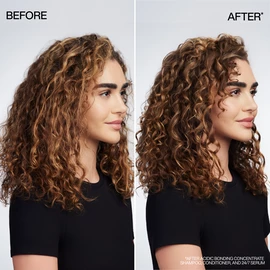
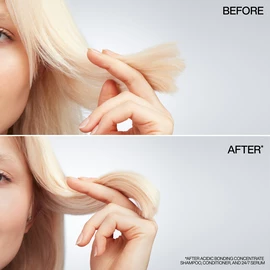
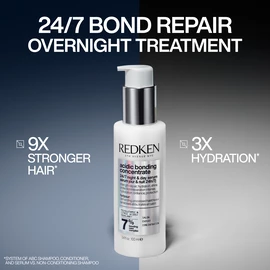
The Acidic Bonding Concentrate Shampoo is powered by a Bonding Care Complex with Citric Acid, which holds the cuticle closed at an acidic pH while it cleanses, so your hair keeps the moisture and protein a standard shampoo would rinse away.
Three adjustments make a longer interval workable:
- Cleanse at the scalp only. Let the rinse water carry suds through the lengths. The ends do not need direct shampoo and will hold more moisture without it.
- Finish with cool water. Hot water lifts the cuticle further. A cooler final rinse helps it lie flat.
- Skip the second lather. Double-shampooing is for heavy buildup, not routine washing on damaged hair.
If your scalp genuinely needs daily cleansing, wash daily and compensate at the ends with a leave-in and mask rather than forcing an interval your scalp cannot tolerate. Scalp health and end condition are separate problems.
How Often Should You Trim Damaged Hair?
Damaged hair should be trimmed every six to eight weeks, because a split end continues to travel up the strand once it forms and removing it early prevents losing more length later.
This is where growing-out strategies most often fail. Skipping trims to gain length feels productive, and the ends keep splitting further up the shaft while you wait. By the time the damage is visible enough to force the appointment, the trim has to take more than a series of smaller ones would have.
Hair grows roughly half an inch a month. A trim taking a quarter inch every eight weeks still nets you visible length across a year while keeping the ends intact. A trim taking two inches once a year does not.
Two situations shorten the interval. Actively breaking hair after a lightening service may need a shape-up every four to six weeks until the compromised section has grown past. Fine hair shows split ends sooner because the fiber diameter is smaller, so damage becomes visible faster.
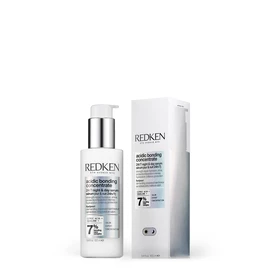
Between appointments, Acidic Bonding Concentrate Hair Bandage Balm delivers an 8% Bonding Care Complex to the ends and visibly seals up to 96% of damaged, dry split ends*. That slows the spread. It does not replace the trim, because a split that has already formed cannot be permanently rejoined.
*Instrumental evaluation of split ends partially or completely closed with two applications of leave-in vs. before application.
How Often Should You Deep Condition Damaged Hair?
A hair mask should be used once or twice a week on damaged hair, applied in place of conditioner rather than in addition to it, because both treat the same layer and stacking them adds weight without adding benefit.
The distinction between mask and conditioner is concentration and dwell time. Conditioner works in about a minute and belongs in every wash. A mask carries a higher active load and needs its stated window, usually five to twenty minutes, to do what it is formulated to do.
Which mask depends on which problem the hair actually has, and our guide to hydrating versus strengthening masks walks through the distinction in detail:
- For structural damage: breakage, poor elasticity, fast color fade. Use a bonding mask.
- For dryness without structural damage: rough texture, dullness, no snapping. Use a moisture mask.
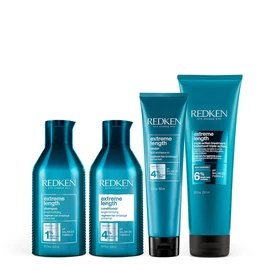
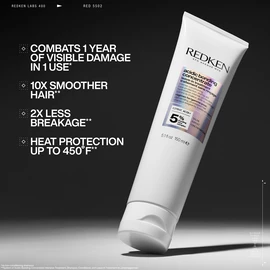
The Acidic Bonding Concentrate 5-Min Liquid Mask covers the first case on a five-minute window, and the All Soft Heavy Cream Mask covers the second with the highest concentration of Redken’s Moisture Complex with Argan Oil, also in five minutes. For severely over-processed hair, Extreme Mask is the heavier option, built around the Interlock Protein Network to reinforce the fiber rather than only soften it.
Twice weekly is the practical ceiling for most damaged hair. Beyond that, fine hair goes limp and heavily processed hair can tip into protein overload if the mask is a bonding formula. More frequent masking is not a faster route to repair.
When Should You Change the Schedule?
The schedule should change when the hair gives one of three signals: stiffness, limpness, or increasing breakage, each of which points to a different adjustment.
Hair feel stiff, rigid, or snaps easily
This is protein and structure outpacing moisture. Keep the bonding cleanser and swap one weekly mask for a moisture formula. Do not respond by dropping bond support altogether, which removes the structural gains along with the stiffness.
Hair feels limp, mushy, or gummy when wet
This is moisture without enough structure. Reduce masking to once weekly, make it a bonding mask rather than a moisture one, and check that a heavy leave-in is not being applied to soaking wet hair where it cannot absorb properly.
Breakage is increasing despite the routine
Look at heat and mechanical handling before changing products. Hot tools without protection undo the routine faster than the routine can rebuild. Extreme Play Safe Heat Protection Treatment shields to 450°F and reduces the appearance of split ends 70%*. If protection is already in place and breakage continues, the damage level needs professional assessment.
*When used as a complete system of Extreme Shampoo & Conditioner.
Damaged hair responds to intervals matched to its condition rather than to habit. Wash less and better, trim on a preventive schedule instead of a cosmetic one, and mask on purpose rather than as a rescue. Then read what the hair tells you: stiffness, limpness, and breakage each point to a specific adjustment, and reacting to the right signal is what turns a routine into recovery.
When to Book a Professional Consultation
To set wash, trim, and masking intervals matched to your hair’s actual damage level, schedule an appointment with a professional Redken hair stylist for a one-on-one consultation. Your stylist can assess porosity and elasticity in person, identify how much length genuinely needs to come off, and build the schedule around your color plans.
Find a Redken salon near you to book a professional consultation.
Next: Post-Color Damage Control: Pair Bonding With Your Color Service. Learn how to repair hair by using gentle, strengthening products, protecting from heat and stress, and maintaining a consistent care routine.