In this article:
- What Bleach Actually Does to the Hair Fiber
- Bleach Damage: What You Can Actually Repair (and What You Can't)
- The Bond-Repair Routine for Bleached Hair
- Habits Causing Your Bleached Hair to Break
Key Takeaways:
- Bleach lightens hair by breaking the disulfide bonds inside the cortex, which lifts the cuticle, drains protein and moisture, and leaves strands weak, porous, and prone to snapping.
- Fully severed bonds cannot regrow, but partially weakened bonds can be reinforced, which is why most bleach damage is manageable rather than a mandatory big chop.
- The core routine is a bond-building wash system, a weekly bond treatment, and an end sealer, all at an acidic pH that helps close the raised cuticle.
- Damage that is truly past repair (gummy, mushy, or shedding in pieces) needs trimming, but a targeted cut preserves far more length than starting over.
- A professional in-salon bonding service before or after any further lightening resets the fiber from a stronger baseline and protects the length you have.
Quick Answer
You repair bleach-damaged hair by reinforcing the broken bonds inside the strand, sealing the raised cuticle, and returning moisture the bleaching stripped away: cleanse and condition with an acidic bond-building system, add a weekly bond treatment, seal the ends, and trim only the sections that are past repair. Bleach breaks disulfide bonds that cannot fully regrow, so the goal is to stabilize what remains and prevent further loss.
Bleach gives you the color, then hands you the bill: strands that feel dry and rough, snap when you brush, and stretch out without bouncing back. The instinct is to cut it all off and start over. In most cases, you do not have to. The right bond-building routine can rebuild much of what lightening broke, and a targeted trim handles the rest.
Bleach Damage at a Glance
| Best for | Hair weakened by highlights, balayage, all-over lightening, or repeated toning |
|---|---|
| Tell-tale signs | Rough or gummy texture, high porosity, snapping, color that fades fast |
| Key fix | Acidic bond-building system (Citric Acid + Bonding Care Complex) plus moisture |
| Can it be repaired? | Partially broken bonds, yes; fully severed bonds cannot regrow |
| Time to results | Visible strength and smoothness gains in 2–3 weeks of consistent use |
| When to trim instead | When wet hair is gummy, mushy, or breaking off in pieces |
What Bleach Actually Does to the Hair Fiber
Bleach damage is the structural weakening that happens when the lightening process breaks the internal bonds and lifts the cuticle to remove pigment, leaving the strand porous, dry, and less able to hold itself together.
Lightening is not a surface change. To reach the pigment deep in the cortex, bleach uses an alkaline formula that swells the strand and forces the cuticle open, then breaks apart the melanin that gives hair its color. In the same step, it also breaks disulfide bonds, the sulfur-to-sulfur links between protein chains that give hair its strength and elasticity. Some of that bond loss is the unavoidable cost of going lighter. When lightening is repeated, pushed further, or overlapped onto already-processed hair, the loss compounds past what the fiber can absorb.
The result is the texture every lightened head knows: the cuticle stays lifted so moisture escapes and the surface feels rough, protein leaks from the cortex so the strand loses its internal scaffolding, and porosity climbs so water and product rush in and out without staying. Hair that is weak, dry, and highly porous is hair that snaps, tangles, and fades fast.
Bleach Damage: What You Can Actually Repair (and What You Can't)
Repairability comes down to whether the bonds are weakened or fully severed, because bond-building treatments can reinforce partial damage but nothing regrows a bond that is completely broken.
Most everyday bleach damage involves partially weakened bonds, and that is exactly where repair works. Reinforcing those connections restores measurable strength, smoothness, and flexibility. The exception is hair that has been over-lightened to the point of structural collapse: strands that feel gummy and stretch like chewing gum when wet, or that break off in short pieces, have lost too much internal structure to rebuild. Those sections need to be cut. The good news is that this level of damage usually concentrates in the most-processed areas, so a targeted trim removes what is unsalvageable while a bond routine protects and strengthens the rest.
| Level | What It Looks Like |
|---|---|
| Mild | Dry, slightly rough, reparable |
| Moderate | Porous, snapping, needs bond repair |
| Severe | Gummy, mushy, needs trimming |
The Bond-Repair Routine for Bleached Hair
A bond-repair routine for bleached hair works in three moves: reinforce the broken bonds, seal the raised cuticle at an acidic pH, and return the moisture lightening stripped away, all used consistently rather than in one heavy treatment.
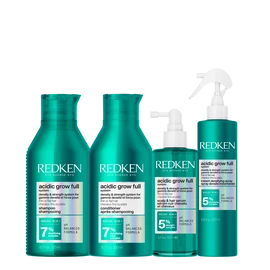
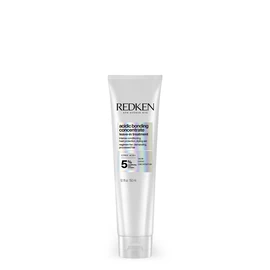
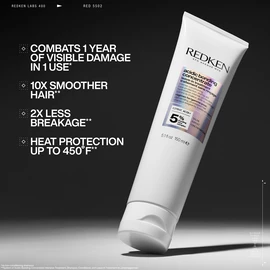
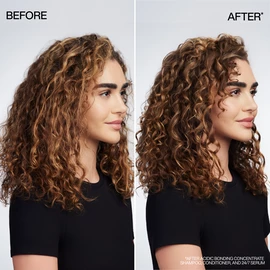
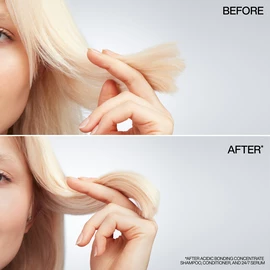
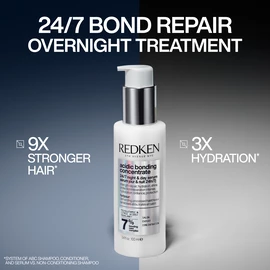
Redken’s Acidic Bonding Concentrate system is built for exactly this. Its Bonding Care Complex with Citric Acid reinforces weakened bonds at a pH of 4.5 to 5.5, the acidic range that helps the lifted cuticle lie flat again.
Cleanse and condition with a bond-building system
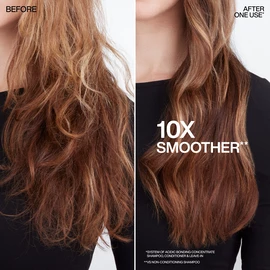
Start with the sulfate-free Acidic Bonding Concentrate Shampoo and Conditioner. Together they cleanse without stripping freshly lightened hair and deliver bond reinforcement at every wash, so repair is built into your routine rather than added on top of it.
Add a weekly bond treatment
Once a week, work the Acidic Bonding Concentrate 5-Minute Liquid Mask through mid-lengths to ends and rinse after five minutes. Concentrated bond reinforcement in one short step compounds the everyday repair from the wash system.
Seal the ends where breakage starts
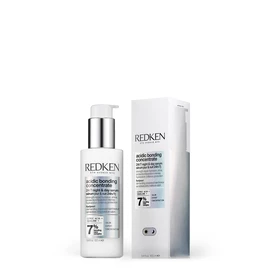
Lightened ends take the most cumulative damage, so target them. The Acidic Bonding Concentrate Hair Bandage Balm delivers an 8% Bonding Care Complex with Citric Acid and madecathenol to relink broken bonds and visibly seal up to 96% of damaged, dry split ends.* It absorbs without greasiness and adds heat protection up to 450°F.
*Instrumental evaluation of split ends partially or completely closed with two applications vs. before application.
Protect color and vibrancy between washes
Bleached hair is usually toned or colored, and both fade fast on porous strands. Alternate the bonding shampoo with the Acidic Color Gloss Sulfate-Free Shampoo to extend vibrancy and add shine, so structural repair and color care happen side by side.
Habits Causing Your Bleached Hair to Break
A few common habits quietly undo bond repair, and correcting them protects the length you are working to keep.
- Stacking lightening sessions too close together: space chemical services and let a bond routine stabilize the fiber in between. Overlapping fresh bleach onto processed lengths doubles the damage where hair is already weakest.
- Brushing or detangling aggressively when wet: porous, bleached hair is at its weakest wet. Use a wide-tooth comb from the ends up, on conditioner-slick hair.
- High-heat styling without protection: heat compounds bleach damage. Keep tools at moderate settings and always use a heat protectant.
- Skipping trims for too long: once an end splits, it travels up the strand. Small, regular trims keep damage from climbing into healthy length.
Repairing bleach-damaged hair is not about one miracle product; it is about reinforcing what lightening weakened and protecting it from here. Rebuild the bonds, seal and moisturize the cuticle, trim only what is truly gone, and keep further lightening in check, and you keep far more of your length while your hair gets stronger week over week instead of breaking off faster than it grows.
When to Book a Professional Consultation
To discover more about repairing bleach-damaged hair, schedule an appointment with a professional Redken hair stylist for a one-on-one consultation. Our professional hair stylists will offer tailored advice and expert tips on assessing how deep the damage runs and the right repair plan for your hair.
Find a Redken salon near you to book a professional consultation.
Next: Growing Out Damaged Hair. Learn about how to grow out damaged hair with a length-retention routine using Redken haircare products.