In this article:
- What Is a Bond Builder?
- What Is a Deep Conditioner?
- What Is the Difference Between a Bond Builder and a Deep Conditioner?
- Which One Does Your Hair Need?
- Can You Use Both a Bond Builder and a Deep Conditioner?
Key Takeaways:
- A bond builder works in the cortex, the strand’s inner core, where it helps reinforce the links between keratin proteins that bleach, color, and repeated heat have weakened.
- A deep conditioner works on the cuticle, the overlapping outer shell, where emollients and humectants smooth raised scales, cut friction, and hold moisture in.
- Strength and softness are separate problems: hair that snaps needs bond chemistry, and hair that is rough but still springy needs moisture.
- The results have different lifespans: strength builds over several weeks of consistent use, while conditioning is a surface deposit that fades as you wash it off.
- When hair needs both, order decides the outcome: bond repair on clean damp hair first, conditioning over it once the interior has been treated.
QUICK ANSWER
A bond builder works inside the hair’s cortex, where it helps reinforce bonds that chemical services and heat have weakened, while a deep conditioner smooths and hydrates the cuticle, so choose by whether your hair feels weak or dry.
Not all products for damaged hair work the same way. One approach works inside the hair fiber, targeting the chemistry that helps hold it together; another works on the surface, improving how the hair feels and behaves. Choose the wrong one for your type of damage, and you may get smoother hair for an evening without addressing what’s behind the problem.
What Is a Bond Builder?
A bond builder is a treatment that works inside the hair’s cortex, where it targets the chemical links between keratin proteins that bleaching, coloring, chemical smoothing, and repeated heat have weakened.
Your hair holds its shape and its strength through a network of links between protein chains. Disulfide bonds are the strongest, and the ones chemical services disrupt. When enough of them give way, the cortex loses load-bearing capacity, which is why over-processed hair stretches too far when wet and then snaps under handling it used to survive.
That is a structural problem, and surface softness does not fix it. A bond builder is the category that sets out to address the interior rather than the surface: getting through the cuticle and helping reinforce the network that is still there, so the strand can carry tension again.
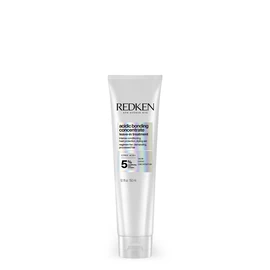
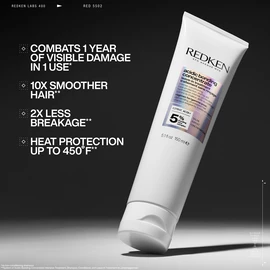
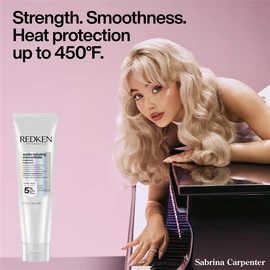
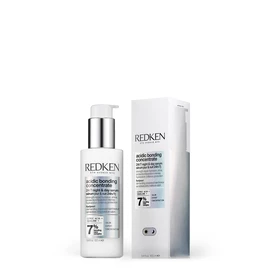
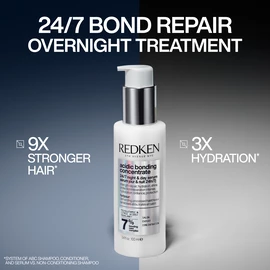
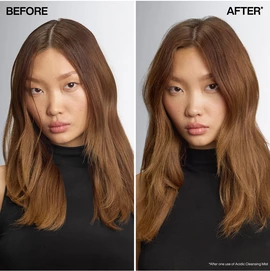
Acidic Bonding Concentrate is built on Redken’s Bonding Care Complex + Citric Acid, which works at a molecular level and penetrates the cuticle, capturing metal ions, reinforcing weakened bonds, and improving hair strength. The Acidic Bonding Concentrate Leave-In Treatment helps strengthen and condition damaged hair while providing heat protection, making it a useful step for hair exposed to regular styling and chemical services.
Two things a bond builder is not: a moisturizer, and a one-use rescue. Strength returns gradually, because the work is reinforcing a network that is still standing, not coating a surface.
What Is a Deep Conditioner?
A deep conditioner is a rich treatment you leave on for several minutes so conditioning agents, emollients, and humectants can deposit on the cuticle, the overlapping outer layer of the strand, and hold moisture inside the fiber.
A healthy cuticle lies flat, like roof tiles. Wear, heat, chemistry, and hard water lift and chip those tiles, and a lifted cuticle does three things you can feel: it catches on the next strand so hair tangles, it scatters light so hair looks dull, and it lets water leave faster so hair reads as dry within hours of washing.
A deep conditioner addresses all three from the outside in. Conditioning agents carry a positive charge and are drawn to the damaged, negatively charged patches on the cuticle, so they deposit where the surface is roughest, oils fill the gaps between scales, and humectants hold water against the strand. Slip, shine, softness, and easier detangling all come from that layer.
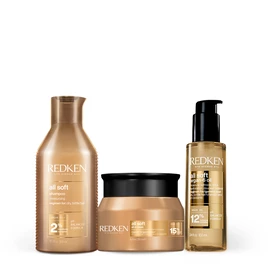
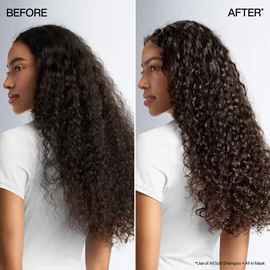
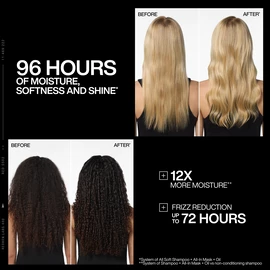
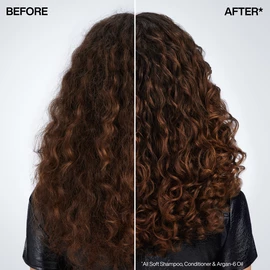
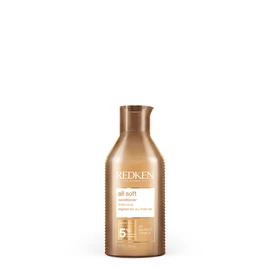
The catch is that the layer is temporary. It survives a few days, then washes off, which makes conditioning a maintenance step and not a repair project. If the wear on your hair comes from brushing, heat and time and not from chemistry, that maintenance is most of the job: the All Soft Conditioner, made with Redken’s Moisture Complex and Argan Oil, helps soften and smooth hair worn down by everyday handling. You could also consider using a hair mask, like the All Soft Heavy Cream Mask, weekly.
What Is the Difference Between a Bond Builder and a Deep Conditioner?
The difference between a bond builder and a deep conditioner is depth: a bond builder works in the cortex on strength, and a deep conditioner works on the cuticle on smoothness and moisture.
| What you are comparing | Bond Builder | Deep Conditioner |
|---|---|---|
| Where it works | Inside the cortex, the strand’s protein core | On the cuticle, the overlapping outer surface |
| What problem it solves | Weakness: stretchy wet hair, snapping under normal handling | Roughness: dryness, dullness, tangling, frizz, no slip |
| How long the result lasts | Cumulative, building over several weeks of consistent use | Until the next few washes remove the deposited layer |
| How often to use it | On a regular schedule: a wash-day step plus a weekly treatment | Every wash for a rinse-out, once or twice weekly for a mask |
| What it will not do | Make hair feel instantly soft, or replace lost moisture on its own | Reinforce the interior of the fiber or restore lost strength |
| Which Redken product | Acidic Bonding Concentrate, for chemically damaged hair that needs bond repair | Redken All Soft rich masks or conditioners for extra moisture. |
Which One Does Your Hair Need?
The right formula depends on whether your hair needs strength or surface smoothing.
A wet stretch test answers it in a minute: wet a shed strand and stretch it, and if it stays stretched, the cortex is compromised.
Reach for a bond builder when:
- Your hair has been bleached, highlighted, colored, relaxed, or smoothed, and it has not behaved the same since.
- Wet strands stretch and do not recover, or snap as you comb them.
- Conditioner makes your hair feel soft and smooth, but it can still break.
- Reach for a deep conditioner when:
- Your hair is rough, dull, or thirsty but still springs back when you stretch it wet.
- The trouble is friction: tangles, flyaways, frizz in humidity, a comb that drags.
- Your hair has never been chemically processed, and heat styling is the worst it gets.
Bond builders are not a general upgrade. Hair that is dry and not damaged has no weakened links to reinforce, and bond chemistry alone leaves it as dry as it started.
Can You Use Both a Bond Builder and a Deep Conditioner?
Yes, in sequence, never mixed together: bond repair goes first on clean, damp hair, and a conditioner follows it. On the days you use a mask, the mask takes the conditioner’s slot instead of stacking on top of it.
Most damaged hair needs both, because a chemical service weakens links and strips lipids in one appointment. Order matters more than the products do: a bond treatment has to reach the cortex, and a heavy conditioning film slows it down.
- Shampoo, then squeeze the excess water out, since treatments spread on soaking hair dilute and slide off.
- Apply the bond treatment through mid-lengths and ends, where the damage is oldest, for the time on the label.
- Rinse, then apply your conditioner. On a treatment day, use the mask in place of the conditioner instead of after it.
- Rinse cool, which helps the cuticle lie flatter than warm water leaves it, then finish on damp hair with a leave-in.
Pro Tip: A workable rhythm is a conditioning step each time, bond repair on a fixed schedule, and one heavier mask session in the week.
Some products do both jobs at once: a mask can carry bond chemistry alongside conditioning agents. The Acidic Bonding Concentrate 5-Min Liquid Mask delivers 14x better detangling.*
* vs. non-conditioning shampoo.
For the full week-by-week version, including what to expect and when, see Building a Damage-Repair Routine That Works at Home. To see the treatments built for compromised hair in one place, browse the Redken damaged hair range.
Bond builders and deep conditioners serve different purposes. One helps reinforce what chemistry and heat weakened inside the strand, the other changes how the surface behaves. Test your hair wet once, and the guesswork is gone: you can name what your hair needs, reach for the right shelf first, and know when it is asking for both in that order.
When to Book a Professional Consultation
Strength and moisture are hard to tell apart from the outside, and buying for the wrong one wastes a month. Book an appointment with a professional Redken hair stylist.
Find a Redken salon near you to book a professional consultation.
NEXT: Building a Damage-Repair Routine That Works at Home. Knowing which one your hair needs answers the what. The next question is how often, and in what order. This routine lays out the week-by-week schedule, so the product you just chose has an actual plan to work inside of.