In this article:
- How Do You Fix Damaged Hair at Home?
- What Should a Routine for Damaged Hair Look Like Week to Week?
- Which Step Matters Most for Damaged Hair?
- How Long Does It Take to See a Difference?
- When Is At-Home Repair Not Enough?
Key Takeaways:
- A damage-repair routine is a fixed schedule: the same steps in the same order, held for a month before you judge it.
- Repair happens on two fronts at once. Bond chemistry helps reinforce weakened links inside the fiber, and cuticle sealing restores the smooth surface that keeps moisture in and friction down.
- The wash step carries the most weight because you repeat it most often, and because it is the moment hair is at its most fragile, wet and swollen.
- The leave-in and overnight steps are where a routine compounds or leaks, since they cover the hours between washes when hair is brushed, tied, heated and slept on.
- Acidic Bonding Concentrate is the route for chemically processed hair that needs bond repair, and Extreme Length is the route for everyday mechanical wear and basic repair.
Damaged hair benefits from consistent care rather than relying on a single treatment. It needs the same thing your stylist already knows: consistency beats intensity. A bond weakens gradually, and improving the condition of the fiber takes time too. This means an effective at-home routine depends on using the right products consistently and giving them time to support the hair.
You need five things done consistently for a month: how you wash, how you condition, what you do once a week, what you leave on between washes, and what happens to your hair overnight. Keep those five steps steady, and give your hair a chance to show you what is actually working.
QUICK ANSWER
Fix damaged hair at home by repeating one consistent routine: a bond-repair shampoo and conditioner at every wash, a weekly intensive treatment, a daily leave-in, and an overnight serum, then judging progress over several weeks.
How Do You Fix Damaged Hair at Home?
Caring for damaged hair at home means using a consistent routine that helps strengthen the fiber, smooth the cuticle, and reduce breakage.
Damage sits in two places. Inside the fiber, chemical processing and heat weaken the links that carry a strand’s strength. On the outside, cuticle scales lift and wear away, which is why damaged hair feels rough, tangles and loses shine. Treat only the surface and the result lasts a day.
Hair’s cuticle lies flattest at a slightly acidic pH, close to the scalp’s own natural pH of about 5, the same way shingles on a roof lie flat until something pushes up from underneath. Push that pH toward alkaline, even by what looks like a small amount, and the cuticle lifts, because the pH scale is logarithmic: one step is a tenfold change, not a gentle one. An acidic formula works with that chemistry instead of against it, which is what helps close the cuticle back down so it can hold moisture and reflect light instead of catching on everything it touches.
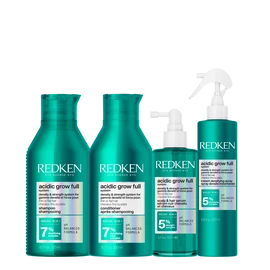
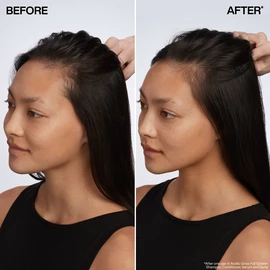
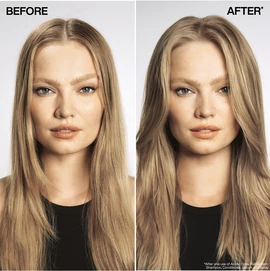
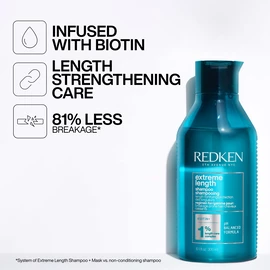
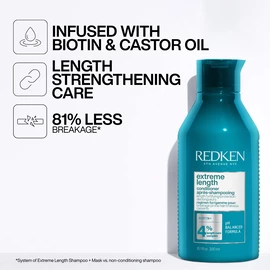
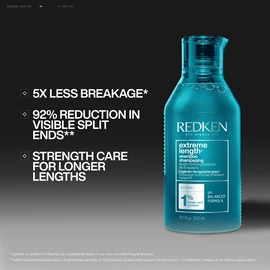
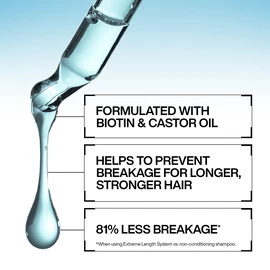
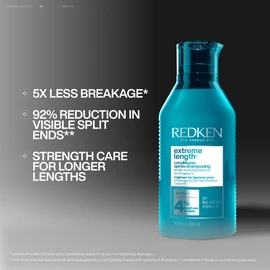
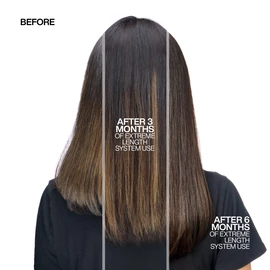
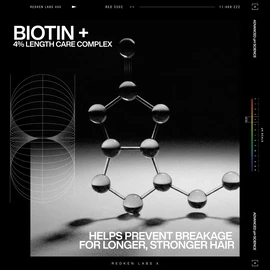
The mechanism decides which range you buy. Acidic Bonding Concentrate, built on Redken’s Bonding Care Complex + Citric Acid, penetrates the cuticle, capturing metal ions and helping reinforce the bonds those services weakened, is the chemistry for hair that has been colored, lightened or relaxed. If your hair is worn from daily handling, Extreme Length, made with Biotin, Castor Oil, and Redken’s Length Care Complex, helps fortify hair worn down by everyday handling, when used as a system.
Three rules put that principle into practice, and they are what decide whether the plan actually works. Use a system, not a single product, because the steps compound. Keep the schedule identical for four weeks so you can tell what changed. And handle wet hair as the fragile thing it is, because most visible breakage is created in the shower.
What Should a Routine for Damaged Hair Look Like Week to Week?
A routine for damaged hair is a weekly schedule built from five steps: a repair shampoo and conditioner at every wash, one intensive treatment a week, a leave-in on every wash day, and a serum overnight.
Step one: the wash
Wash is where repair starts or gets undone. Use a shampoo built for damage, not a clarifying or volumizing formula, apply it at the scalp, and massage for thirty to sixty seconds so the actives have contact time. The Acidic Bonding Concentrate Shampoo is formulated for this step on chemically damaged hair.
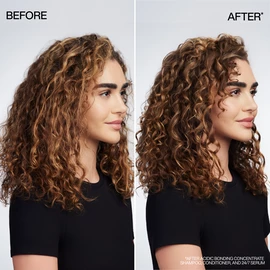
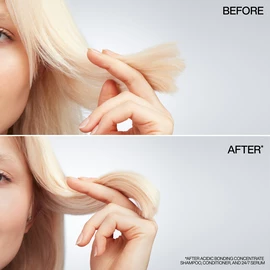
Used as a system with the matching conditioner, it delivers a 56% reduction in breakage.*
* Acidic Bonding Concentrate Shampoo & Conditioner vs. non-conditioning shampoo.
Wash cadence is set by your scalp, not your ends. Two or three times a week suits most damaged hair; stretching washes further only delays the step that delivers the actives.
Step two: the conditioner
Conditioner does a different job from the shampoo, and on damaged hair it is not optional. Apply the Acidic Bonding Concentrate Conditioner from mid-lengths to ends, leave it a full minute, and detangle with a wide-tooth comb while the hair is slippery. Detangling then, and not later, costs you the least hair.
Step three: the weekly intensive
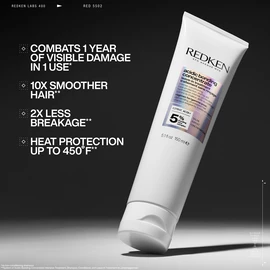
Once a week, add this concentrated treatment as the first step in your routine as a pre-shampoo treatment. The Acidic Bonding Concentrate Intensive Treatment is the deeper version of the same bond chemistry, built for a longer contact time on hair that needs more than a conditioner can carry. This pre-shampoo treatment reinforces weak bonds to visibly transform the most damaged hair in only 5 minutes.
Step four: the daily leave-in
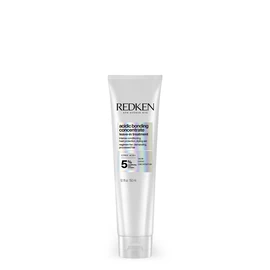
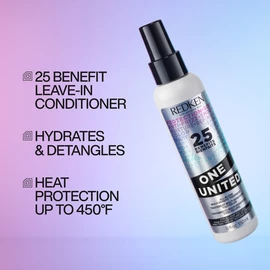
Everything so far gets rinsed out. The leave-in is the layer that stays. Work the Acidic Bonding Concentrate Leave-In Treatment through damp mid-lengths and ends before you dry or style, every wash day. It reduces the drag of brushing and cuts friction against clothes and pillows.
Pro Tip: If you use hot tools, add a dedicated heat protectant over the leave-in before the tool goes near your hair. When time is short, the leave-in is the step to keep.
Step five: overnight
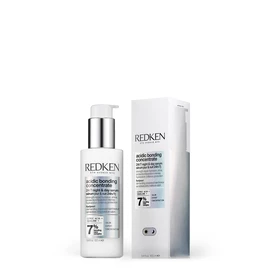
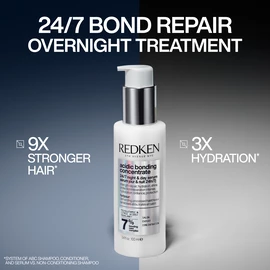
Hair is exposed to friction while you sleep. The Acidic Bonding Concentrate 24/7 Night & Day Serum helps care for the hair during this time: apply generously from mid-lengths to ends before bed, then braid loosely or wrap the hair so it is not ground against the pillow.
A realistic week looks like this:
- Wash day one: shampoo, conditioner, leave-in on damp ends.
- Wash day two: the same three steps.
- Third wash: the intensive treatment in the conditioner’s place, then the leave-in.
- Every night: serum on the ends, hair loosely secured.
- Non-wash days: leave it alone.
Which Step Matters Most for Damaged Hair?
The step that matters most is the wash, because it is the highest-frequency step in the routine and the moment when hair is wet, swollen and at its most vulnerable to mechanical stress.
People invest in the weekly treatment and treat the shampoo as neutral. It is not. A stripping shampoo removes what your treatment deposited days earlier, so the routine spends the week undoing itself.
The leave-in comes second, because it is the only step present during the hours when damage is created: brushing, tying, heat styling and sleeping all happen between washes.
The weekly intensive comes third. It works, but on hair the other steps have kept in reasonable condition. If you can hold only two habits, hold the wash and the leave-in. Whether that slot takes a bond builder or a deep conditioner depends on whether your problem is strength or dryness, and Bond Builders vs. Deep Conditioners: Which One Does Your Hair Need? walks through the choice.
How Long Does It Take to See a Difference?
The four-week expectation curve is the realistic timeline for a damaged hair care routine: surface improvements arrive almost immediately, strength and breakage changes take weeks, and anything already split will not rejoin at any point.
- After the first wash: slip, softness and detangling improve straight away. That change is worth having, but it is surface deposit, so it tells you the product suits your hair and nothing more.
- End of week one: hair should feel less rough when dry and take styling with less effort. Frizz around the crown settles first, because that is where cuticle wear shows most.
- Weeks two and three: the honest signal appears. Look at your brush, your shower floor and the shoulders of your dark clothes. Fewer short broken pieces is the measure.
- Week four: wet-hair behavior should have changed. Hair that used to feel stretchy and slack when soaked should feel more resilient, and elasticity tracks structural condition, not surface condition.
There are two factors to keep in mind. Split ends do not seal shut permanently, so a split you already have is a haircut, not a routine. And progress is not linear: a heavy heat week or a color appointment resets part of the curve.
When Is At-Home Repair Not Enough?
At-home repair reaches its limit when hair has lost structural integrity instead of surface condition, which means the fiber itself is compromised past the point where any rinse-out or leave-out product can restore how it behaves.
The signal to watch comes from the timeline above: breakage still increasing after four consistent weeks. If a month of the same routine leaves you collecting the same short broken pieces, your handling, your heat or your water is doing damage the routine cannot outrun. What can still be improved, and what cannot, is the subject of Reversible vs. Permanent Hair Damage: What Can Actually Be Fixed.
Shedding from the root, with a small white bulb attached, is a separate matter, and it belongs with a doctor or trichologist.
Neither signal means you stop the routine. Both mean it needs a professional decision on top: how much length to remove, and how long to wait before the next chemical service.
When to Book a Professional Consultation
Book time with a professional Redken hair stylist when the month is up and the breakage has not slowed, or before your next color appointment. A stylist can look at your hair in person, talk through what has changed, and help you decide whether to adjust the routine, take off length, or wait before the next service.
Find a Redken salon near you to book a professional consultation.
NEXT: How the Acidic Bonding Concentrate System Works
A routine is only as good as the chemistry behind it. This breakdown covers why the range is formulated acidic and what each product is actually doing at every step of the routine you just built.