In this article:
- What Is Acidic Bonding Concentrate?
- Why Is the Formula Acidic?
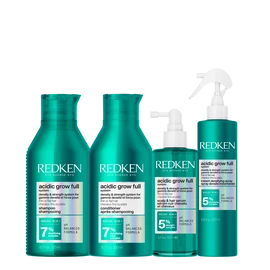
- What Does Each Product in the Range Do?
- How Do You Use the Acidic Bonding Concentrate System?
- Who Should Not Use a Bonding System?
Key Takeaways:
- A bonding system works inside the fiber on chemical links that color, lightening and perming have weakened, a different job from adding moisture to the surface.
- The formula is acidic on purpose. An acidic pH encourages the cuticle scales to contract and lie flat, while an alkaline service does the opposite.
- Redken’s Bonding Care Complex + Citric Acid works at a molecular level, penetrating the cuticle, capturing metal ions and helping reinforce the bonds that those services weaken.
- Every product carries the same chemistry at a different strength and leave-on time, from the wash step through the leave-in, the liquid mask, the intensive treatment, the serum and the balm.
- The range is not for everyone. Hair that is dry but structurally sound, and hair worn down only by brushing and styling, both belong somewhere else.
Bonding products are designed to support weakened bonds within the hair fiber. Acidic Bonding Concentrate has a focused job: helping reinforce hair weakened by chemical processing. And its pH is not just a number on the bottle. It is an important part of how the formula works.
QUICK ANSWER
Acidic Bonding Concentrate is Redken’s bonding range for chemically damaged hair, built around Redken’s Bonding Care Complex + Citric Acid, which penetrates the cuticle, captures metal ions and helps reinforce weakened bonds inside the fiber.
What Is Acidic Bonding Concentrate?
Acidic Bonding Concentrate is Redken’s bond-repair system for chemically damaged hair: a range of cleansers, conditioners, treatments and leave-in products sharing one acidic formula.
Hair holds its strength through disulfide bonds, the strongest chemical links inside the cortex, the dense inner core of the strand. Color, lightening, relaxing and perming work by opening the fiber and rearranging some of those links, and not every link comes back. Repeat that often enough and the fiber loses strength, gains porosity and snaps when handled.
That is what the Acidic Bonding Concentrate range is formulated for. Redken states it plainly: Acidic Bonding Concentrate is powered by Redken’s Bonding Care Complex + Citric Acid, which penetrates the cuticle, capturing metal ions and helping reinforce the bonds that those services weaken.
Why Is the Formula Acidic?
Healthy hair sits at a naturally acidic pH, between 4.5 and 5.5. Everyday exposure to water and chlorine runs higher and more alkaline, and that shift is part of what damages hair over time. An acidic formula works by helping re-balance your hair's pH. The pH scale is logarithmic, so a formula just one point more acidic is not a small shift: it is ten times more acidic.
What citric acid contributes
Citric acid is an alpha hydroxy acid, and in Acidic Bonding Concentrate it helps reinforce weakened bonds in your hair.
What the Bonding Care Complex does
Redken's Bonding Care Complex + Citric Acid works at a molecular level, penetrating the cuticle, capturing metal ions, and reinforcing weakened bonds to improve hair strength.
What Does Each Product in the Range Do?
Each product carries the same bonding chemistry at a different concentration and contact time, so the range works as one system at several strengths, not as seven competing products.
The wash step: Shampoo and Conditioner
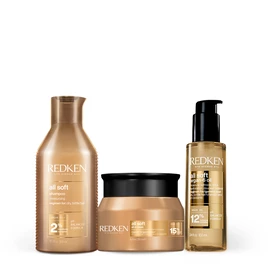
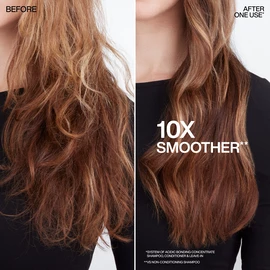
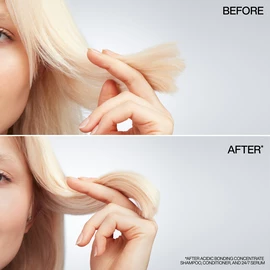
The Acidic Bonding Concentrate Shampoo and the Acidic Bonding Concentrate Conditioner are the base of the system and the two products to buy first. Used as a pair they deliver an 89% reduction in combing force.*
* Acidic Bonding Concentrate Shampoo & Conditioner vs. non-conditioning shampoo.
Damaged hair breaks most often during the wash, so an easier two minutes at the detangle prevents the next round of damage.
The weekly step: 5-Min Liquid Mask and Intensive Treatment
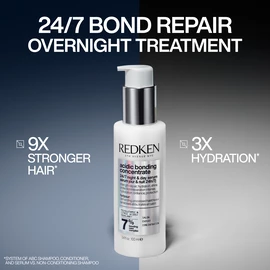
The Acidic Bonding Concentrate 5-Min Liquid Mask is the fast weekly reset, a pourable mask that stands in for conditioner for five minutes and delivers 3x stronger hair.**
** vs. non-conditioning shampoo.
The Acidic Bonding Concentrate Intensive Treatment is the heaviest in the range, for hair that has just been through a service. Pro Tip: Use one or the other in a given wash, never both.
The daily step: Leave-In Treatment and 24/7 Night & Day Serum
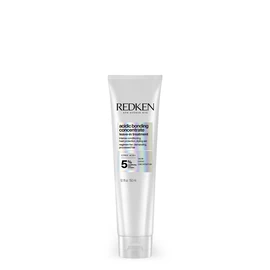
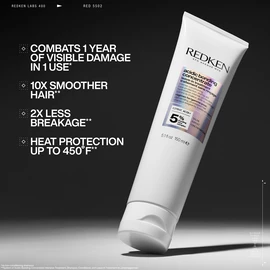
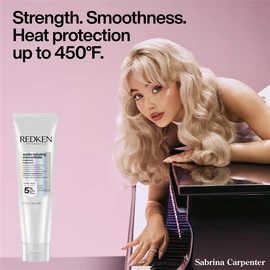
The Acidic Bonding Concentrate Leave-In Treatment keeps the chemistry on your hair between washes: it goes on damp hair, is not rinsed, and takes over when the rinse-out products stop working. The 24/7 Night & Day Serum is built for continuous wear through the day and overnight, for anyone stretching washes.
The targeted step: Hair Bandage Balm
The Acidic Bonding Concentrate Hair Bandage Balm is the only product aimed at one part of the strand. Citric Acid relinks broken bonds to help repair strength and elasticity deep inside the hair, while Madecathenol binds the cuticle layers to the cortex to seal damaged ends. Use it on the last few inches only.
How Do You Use the Acidic Bonding Concentrate System?
Using the system is a matter of order and substitution: the wash steps run every time, one treatment steps into the conditioner’s slot on treatment days, and the leave-in products go last.
Substitution is the rule that settles most layering questions. A concentrated treatment carries the same chemistry as the conditioner at a higher strength, so on a treatment day the 5-Min Liquid Mask or the Intensive Treatment takes the conditioner’s place in that wash. It does not go on after the conditioner, and the two treatments are never used together: two rinse-out products of the same type do not deliver twice the bonding, and on fine hair the extra weight shows as limpness within a day. What does stack is products with different jobs: rinse-out, then leave-in, then a balm or serum on the ends.
- Wash with the Acidic Bonding Concentrate Shampoo, massaging for about a minute so the formula has contact time before you rinse.
- Follow with the Conditioner for a full minute. On a treatment day the 5-Min Liquid Mask takes that slot for five minutes, or the Intensive Treatment for 5-10 minutes.
- Comb the Leave-In Treatment through damp mid-lengths and ends.
- Finish with the Hair Bandage Balm on splitting ends, or the 24/7 Night & Day Serum to carry the chemistry between washes.
Cadence is simpler than the product count suggests: shampoo and conditioner every wash, one treatment a week, the leave-in whenever your hair is wet. In the two weeks after a color or lightening service, move the treatment to twice a week, then drop back to once.
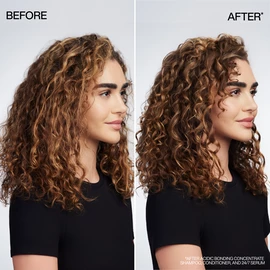
Slip and softness shift from the very first wash, while strength takes several weeks of steady, consistent use. For where each step lands in an ordinary week, see Building a Damage-Repair Routine That Works at Home.
Who Should Not Use a Bonding System?
A bonding system is not the best choice for hair whose problem is moisture or mechanical wear instead of weakened chemical bonds, because bond chemistry needs weakened bonds to act on.
Dry is not the same diagnosis as damaged. Hair can feel rough and look dull simply because it is short on moisture, with the fiber underneath intact. That hair responds to a hydration routine, and a bonding system will feel underwhelming on it. The test is behavior under tension: a wet strand that stays stretched is damaged.
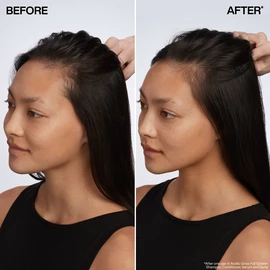
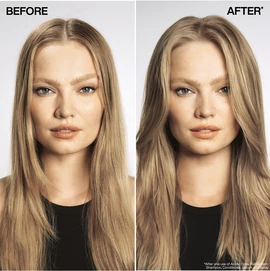
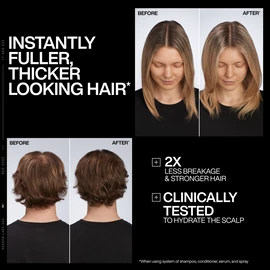
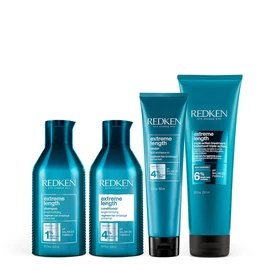
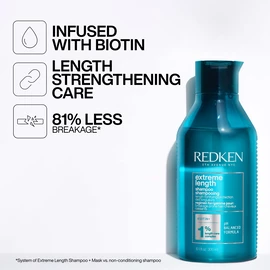
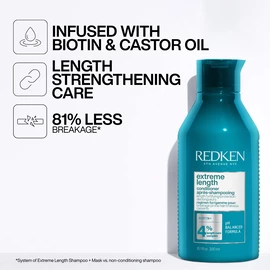
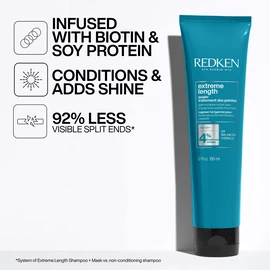
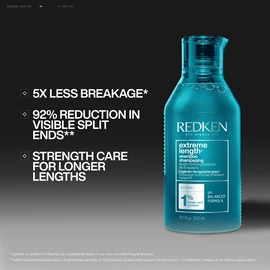
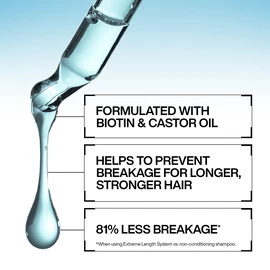
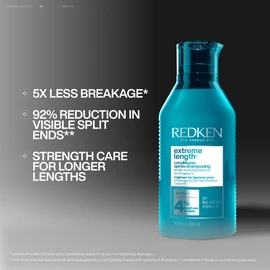
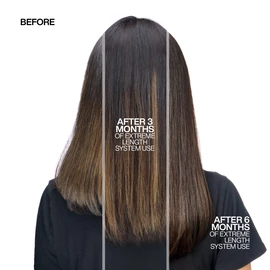
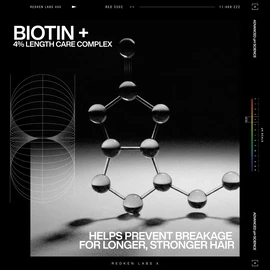
Hair weakened by brushing, tying, and friction without chemical processing needs a different approach than hair with bond damage from chemical services. For this type of breakage, Redken recommends Extreme Length, made with Biotin, Castor Oil, and Redken’s Length Care Complex, helps fortify hair root to tip to reduce breakage for longer-looking length, when used as a system. Acidic Bonding Concentrate is for chemically damaged hair that requires bond repair, and Extreme Length is for basic damage repair.
When to Book a Professional Consultation
A stylist can look at your hair in person and help you figure out whether it needs bond repair, moisture, or a cut, which is the question this whole range hangs on. Bring the service history: what was done, how recently, and how your hair behaved afterward. That, plus your hair in front of them, is usually enough to say which part of the range is worth buying.
Find a Redken salon near you to book a professional consultation.
NEXT: How to Prevent Hair Breakage: A Checklist
Understanding the chemistry behind repair is half the work. Protecting the result is the other half. This checklist covers the daily habits, wet-hair handling, heat settings, and overnight protection that keep the bonds you just reinforced from taking on new damage.