In this article:
- Can Damaged Hair Be Repaired?
- What Does Repair Mean for Damaged Hair?
- Which Kinds of Hair Damage Are Reversible?
- Which Kinds of Hair Damage Are Permanent?
- When Do You Have to Cut Damaged Hair Off?
Key Takeaways:
- Hair is not living tissue. Once a strand leaves the follicle it has no blood supply and no cells, so it cannot regenerate.
- Repair covers three jobs: helping reinforce weakened bonds inside the fiber, sealing a lifted cuticle, and coating the strand until the next wash. Only the first two change the fiber itself.
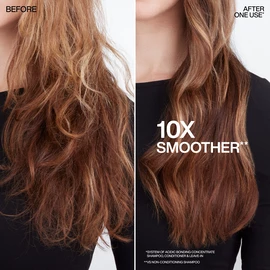
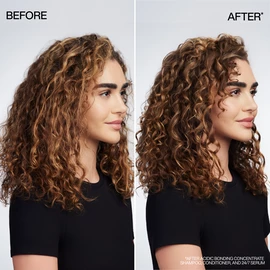
- Reversible damage is roughness, dryness, tangling, dullness, and weakened bonds in a cortex that is still intact. That is where a routine earns its place.
- Permanent damage is structural loss: a split that has opened the cortex, keratin dissolved by over-lightening, and cuticle worn away entirely. Products can mask it, and masking washes out.
- When ends split upward or wet hair stretches without recovering, cutting is the only answer, and a repair range is there to protect what you keep rather than to rescue what you cut.
When hair is damaged, the big question is usually pretty simple: can it be fixed? That depends on what kind of damage you are dealing with. Some can respond well to the right care and chemistry, while more severe damage may call for a trim. Knowing the difference can make it easier to figure out where to focus your routine.
QUICK ANSWER
Damaged hair can be improved but never healed, because hair is not living tissue: bond chemistry and cuticle sealing change how the fiber behaves, while split ends and dissolved structure respond only to scissors.
Can Damaged Hair Be Repaired?
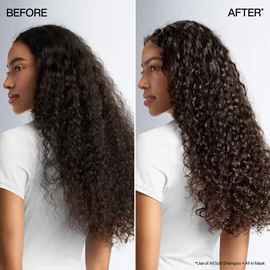
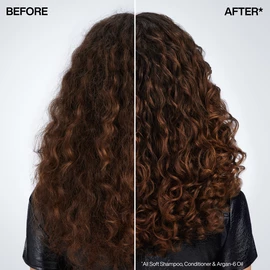
Yes, within limits. Damaged hair can be repaired in the sense that the right care can improve how the hair fiber looks, feels, and behaves. But it cannot be regenerated, because a hair strand is not living tissue.
That distinction matters. The follicle under your scalp is living tissue: it has a blood supply, cells, and the machinery needed to produce hair. The strand that grows out of it is different. Once it emerges, it is a finished structure made primarily of keratin, with its cuticle and internal bonds already in place. It has no cells and no built-in ability to heal itself.
Think about a split end. Once a strand has split, it cannot knit itself back together. Products can temporarily smooth the rough edges and make the damage less noticeable, but the split itself remains and can continue traveling up the strand until that section is trimmed away.
The goal is to work with the fiber that is still there, improving its condition and helping it behave more like healthier hair. The useful question is not just whether a product “repairs” damaged hair, but what does it actually change, and how long does that change last?
What Does “Repair” Mean for Damaged Hair?
In hair care, “repair” is used to describe products that improve the condition, strength, appearance, or feel of damaged hair. Because hair is not living tissue once it emerges from the scalp, products cannot restore it to its original biological state. Instead, they can work on different parts of the hair fiber to improve how it performs and looks.
- Bond care. Some formulas are designed to support weakened bonds within the hair fiber caused by chemical services or other forms of stress. This can help improve the hair’s strength and resilience with continued use.
- Surface care. Formulas can also smooth the cuticle, helping reduce friction and improve softness, shine, and manageability.
- Cosmetic conditioning. Ingredients such as silicones, oils, and film formers coat the hair to improve how it feels and looks. These effects are temporary and diminish with washing.
Which Kinds of Hair Damage Are Reversible?
Reversible hair damage sits at the surface or in bonds that product chemistry can still reach, which means the cortex is intact and the fiber can behave close to the way it used to.
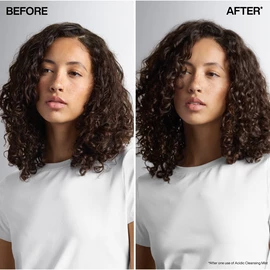
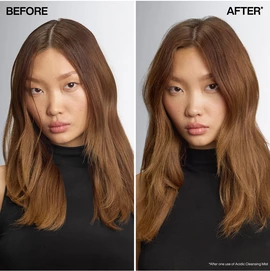
- Roughness and dryness from stripping cleansers, hard water, or sun. The lipid layer is depleted and the cuticle is lifted, and both respond to a sealing routine.
- Tangling and drag. Raised scales catch on each other, so smoothing the surface lowers the force you apply detangling.
- Dullness. A rough surface scatters light and a flat one reflects it, which is why shine changes fastest.
- Weakened bonds from color or heat, where the fiber still stretches and recovers when wet. Bond chemistry has something to hold onto.
Reversible does not mean instant. Slip and softness can change after the first wash, while improving the hair’s strength and condition takes several weeks of consistent care. And that progress is easier to maintain when the source of the damage is reduced, which is the pictureBuilding a Damage-Repair Routine That Works at Home sets out week by week.
If you are repairing damage while continuing to expose your hair to the same stress that caused it, you are working against your own routine. A repair product can help improve the condition of the fiber, but it cannot fully offset ongoing damage from daily flat ironing, bleaching, or other repeated stress.
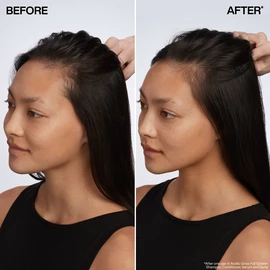
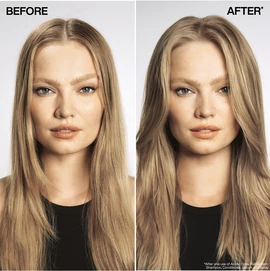
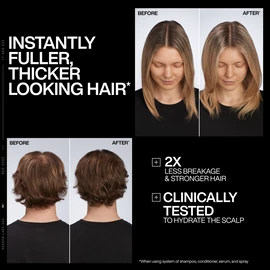
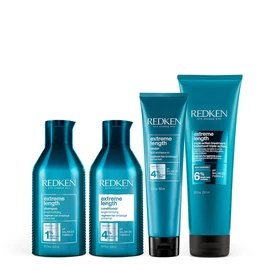
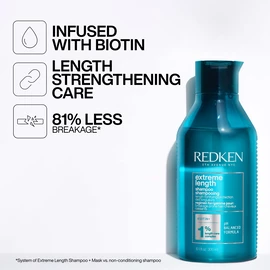
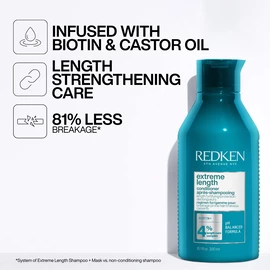
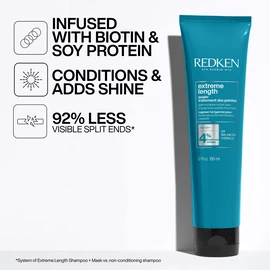
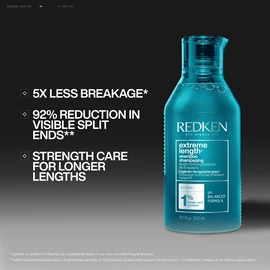
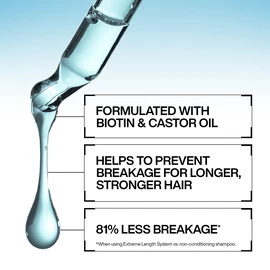
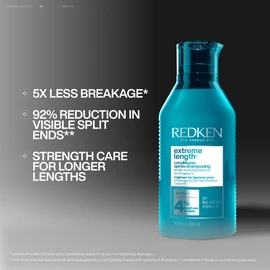
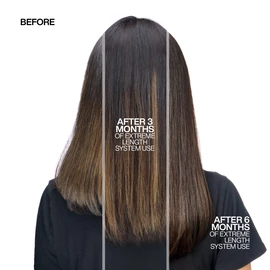
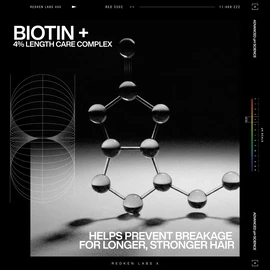
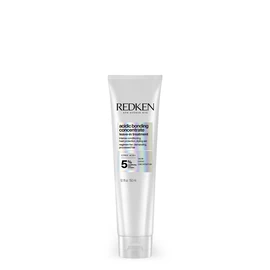
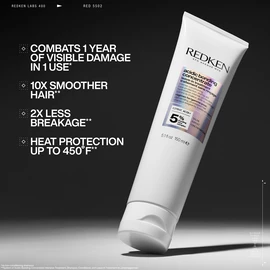
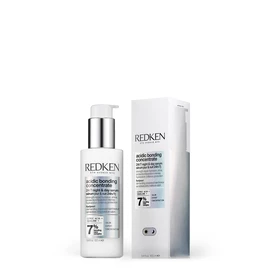
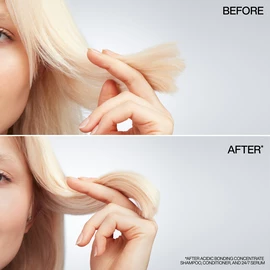
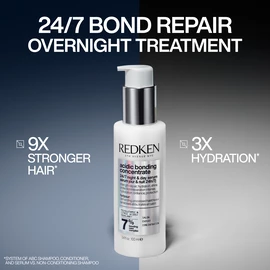
Match the chemistry to the cause. Chemically damaged hair needing bond repair is Acidic Bonding Concentrate territory. For the mechanical kind, Extreme Length, made with Biotin, Castor Oil, and Redken’s Length Care Complex, helps fortify hair worn down by everyday handling, when used as a system.
Which Kinds of Hair Damage Are Permanent?
Permanent hair damage is structural loss that no product can put back: a split that has opened the cortex, keratin dissolved by over-processing, and cuticle scales worn off the strand entirely.
Split ends
A split end is a fiber separated lengthwise. The cortex is exposed, and no chemistry fuses the halves back together for good. Sealing products are honest about what they do: the Acidic Bonding Concentrate Hair Bandage Balm uses Citric Acid plus Madecathenol to bind the cuticle layers to the cortex and visibly seal damaged ends, which reduces the snagging that drives the split upward. Worth doing, and not the split undone.
Over-processed, dissolved structure
Repeated lightening degrades protein structure, on top of disabling the pigment that gave hair its color. When enough keratin is gone, hair feels gummy when wet and stretches under almost no tension. Bond chemistry supports what remains; it cannot supply protein that has left.
Permanently raised porosity
Cuticle scales worn away do not grow back. Hair in that condition absorbs and loses water faster, so it goes rough again within a day of every wash. You can manage it, not restore it.
The line between the two is not how bad the hair looks. Hair can look rough and feel terrible while the underlying fiber is still intact. Reversible damage is a fiber that kept its structure and lost condition. Permanent damage is a fiber that has lost material.
| Reversible damage | Permanent damage | |
|---|---|---|
| What it is | Roughness, dryness, tangling, dullness, bonds weakened by color or heat. | Split ends, dissolved keratin, cuticle worn away. |
| What is happening in the fiber | The cuticle is lifted and some internal links are compromised. The cortex is intact. | The cortex is exposed or fractured and the strand has lost material it cannot remake. |
| Can product chemistry address it | Yes. Bond care helps reinforce weakened links and acidic care flattens the surface. | No. Products improve appearance but cannot restore lost structure. |
| How long the result lasts | Cumulative while the routine continues, because the fiber itself has changed. | Temporary. Coating washes out and the split remains. |
| What to do about it | Build a repair routine and remove the cause. | Cut the failed length off, then protect the hair you keep. |
When Do You Have to Cut Damaged Hair Off?
Cutting can be the answer when the fiber has failed structurally, and three signals tell you that it has: ends that split upward, wet hair that stretches and stays stretched, and strands that snap under almost no tension.
Check on clean, unstyled hair in good light. Any one of the three is enough.
- Splits traveling upward. Look at the last two inches. If the separation starts above the very tip, or a strand has divided into three, the split is moving, and every brush stroke moves it.
- Wet hair that stretches and stays stretched. Hold a wet shed strand between two fingers about two inches apart and pull gently. Sound hair gives a little and springs back. Hair that stays long and limp has lost the structure that returns it.
- Snapping under almost no tension. If strands break while you finger-detangle a conditioned, wet section, the fiber is failing under a force it should shrug off. Pale or translucent ends say the same thing.
A split does not stop where it started, so half an inch now is cheaper than three inches later. Cut above the damage, not through it, and leave over-processed hair to a professional.
After the cut, product chemistry earns its keep, because you are maintaining a sound fiber instead of propping up a failed one. Build the routine with the Redken damaged hair range, and change the habit that caused it. A fresh cut on an unchanged routine ends up the same way.
The useful way to think about damaged hair is not fixable versus ruined. It is what can still be improved versus what is already gone. Roughness, dullness, tangling, and weakened bonds can often be improved with the right routine. Splits, missing material, and worn-away cuticles cannot be put back, which is where trimming and prevention come in.
When to Book a Professional Consultation
Book the appointment when you cannot tell whether the ends are salvageable or the length has to come off. That call is easier with the whole head under salon light and a wet strand pulled by someone who does it daily. Go before your next color or lightening service, not after.
Find a Redken salon near you to book a professional consultation.
NEXT: Bond Builders vs. Deep Conditioners: Which One Does Your Hair Need?
Knowing what can still be improved is the first decision. Choosing the right tool for that improvement is the next one. This comparison walks through a one-minute test that tells you whether your hair needs strength or moisture, so you’re reaching for the right shelf first.